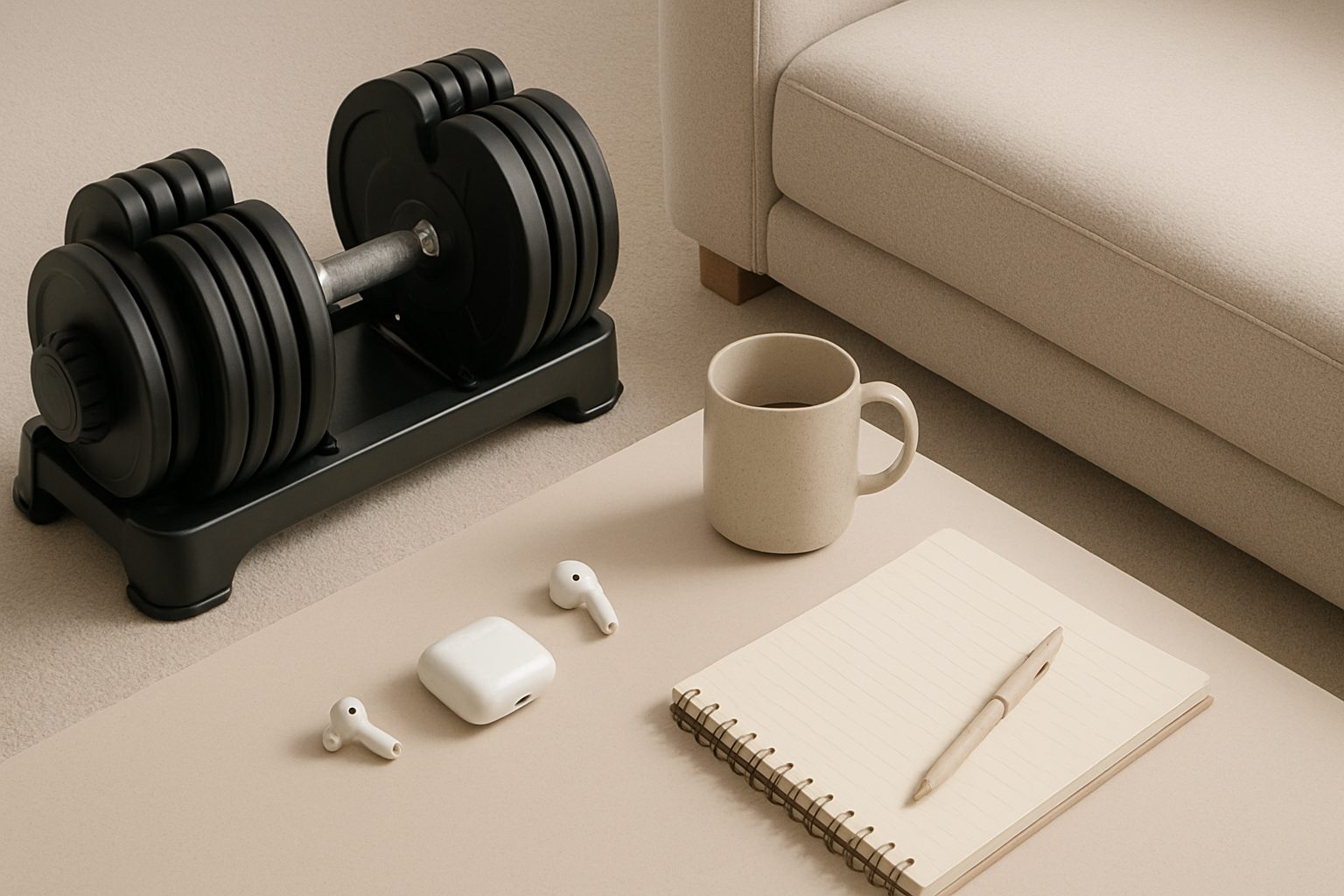
Best Heavy-Duty Dumbbell Rack UK: Top Picks Up to 50 kg per Pair
When you're training seriously with heavy dumbbells, the rack you choose matters as much as the weights themselves. A flimsy dumbbell stand won't survive 50 kg pairs being loaded and unloaded daily, and it'll wobble during your workout. You need something that's built to handle that load—solid steel, proper welds, and feet that won't let the thing tip over mid-set.
This guide covers what to look for in a heavy-duty rack for the UK market, then walks through the types and features that actually deliver.
What Makes a Rack "Heavy-Duty"?
Heavy-duty matters here because most budget racks max out at 100–150 kg total capacity. If you're storing multiple pairs of 40–50 kg dumbbells, you're quickly hitting 200+ kg. Here's what separates proper racks from the rest.
Steel gauge and thickness is your first clue. Anything under 1.5 mm steel will flex noticeably. Look for 2 mm or thicker—that's what commercial gyms use, and it's non-negotiable for stability. The uprights should be square tubing (at least 40×40 mm), not flat bars.
Weld quality isn't something you can inspect from a product photo, but reputable manufacturers will use continuous welds rather than spot welds at stress points. Spot welds are cheaper but fail when you're racking heavy weights repeatedly.
Base weight and footprint matter more than most people think. A 200+ kg rack with a narrow base is asking for a tip-over. You want feet that are spread wide enough that tipping is genuinely difficult. Anti-tip feet (usually angled or weighted) prevent the whole thing pivoting forward when you load one side.
Load distribution across tiers. Some racks concentrate weight on the bottom tier, which stresses the base. Better designs spread dumbbells across three or four levels, reducing stress on any single point.
Horizontal vs Vertical Storage
You've got two main layouts for UK homes and garages: horizontal (all dumbbells in a row across the bottom) and vertical (tiered, with dumbbells stacked up).
Horizontal racks take up more floor space but are easier to grab weights from during a workout. They're straightforward to load and less likely to wobble because weight's distributed along the base. If your garage has 1.5–2 metres of uninterrupted floor space, a horizontal rack is simpler.
Vertical racks fit into a tighter footprint—useful if you're in a small garage or home gym. A three-tier vertical rack holding up to 200 kg might only need 1 metre by 0.5 metres. The trade-off is you're stacking weight vertically, so the base has to be absolutely solid. They also take slightly longer to grab weights during workouts because you're reaching across and up rather than just bending down.
For serious lifters storing multiple pairs of 40–50 kg dumbbells, vertical is usually more practical in UK homes where space is tight.
Key Specifications to Check
Total load rating. This should be 200 kg minimum if you're storing four pairs of 40 kg dumbbells. Some makers list per-tier capacity (e.g., 80 kg per tier) rather than total—do the maths before buying.
Dumbbell handle diameter. Most racks fit standard 28–32 mm handles, but some cheap ones have narrower slots. Check the product specs against your dumbbells' handle diameter before ordering.
Depth. Horizontal racks need enough depth that a 50 kg dumbbell sits flat without tipping sideways. Look for at least 400–500 mm depth for anything over 40 kg per side.
Height. For a vertical rack, you want something between 1.2–1.5 metres so you're not reaching above shoulder height for top-tier weights. Much taller and it becomes awkward and unstable.
Footprint. Measure your space first. A horizontal rack might be 1.8 m long but only 0.6 m deep. A vertical rack might be 1 m wide and 1.5 m tall. Both fit different homes.
Materials and Construction
Steel is the standard for serious racks, and it should be either powder-coated or galvanised to resist rust in damp garages. Rust doesn't just look bad—it can weaken welds over time.
Rubber pads or feet should cover the bottom. Bare metal on concrete or garage floors will slide and scar everything. Good feet are angled or weighted to resist forward tipping.
Don't bother with plastic or aluminium racks if you're regularly handling 40–50 kg pairs. They're fine for lighter dumbbells, but they'll flex and eventually fail under heavy load. Steel-only for this category.
Typical UK Pricing and Availability
Expect to pay £150–400 for a genuine heavy-duty rack rated 200+ kg. Budget options under £100 exist but rarely handle serious weight reliably—you'll find yourself replacing it within a year. Mid-range racks (£150–250) are usually your best value for load capacity and build quality. Premium brands offering commercial-grade racks can exceed £300, but that's typically only needed for public gyms or extreme home setups.
Most are available through major UK online retailers with next-day or 2-day delivery, and many offer returns if the rack arrives damaged.
Final Thoughts
A heavy-duty dumbbell rack is an investment you'll use every training session. Skimping here means wobbling weights, damaged floors, and an unsafe setup. Steel construction, proper weld quality, wide footprint, and a realistic load rating are non-negotiable. Measure your space first, decide between horizontal and vertical, then pick something rated for at least 200 kg total capacity. It'll outlast cheaper alternatives and keep your dumbbells—and you—safe.
More options
- Mirafit 3-Tier Dumbbell Rack (Amazon UK)
- Body Power Dumbbell Rack (Amazon UK)
- Wall-Mounted Dumbbell Holder Bracket Set (Amazon UK)
- Rubber Hex Dumbbell Set with Rack (Amazon UK)
- Adjustable Dumbbell Stand / Cradle (Amazon UK)